
Building the web layer for AI agents
AI agents are changing how information is discovered and used. For Nebius, that shift creates an infrastructure challenge and an opportunity to rethink search from the ground up.
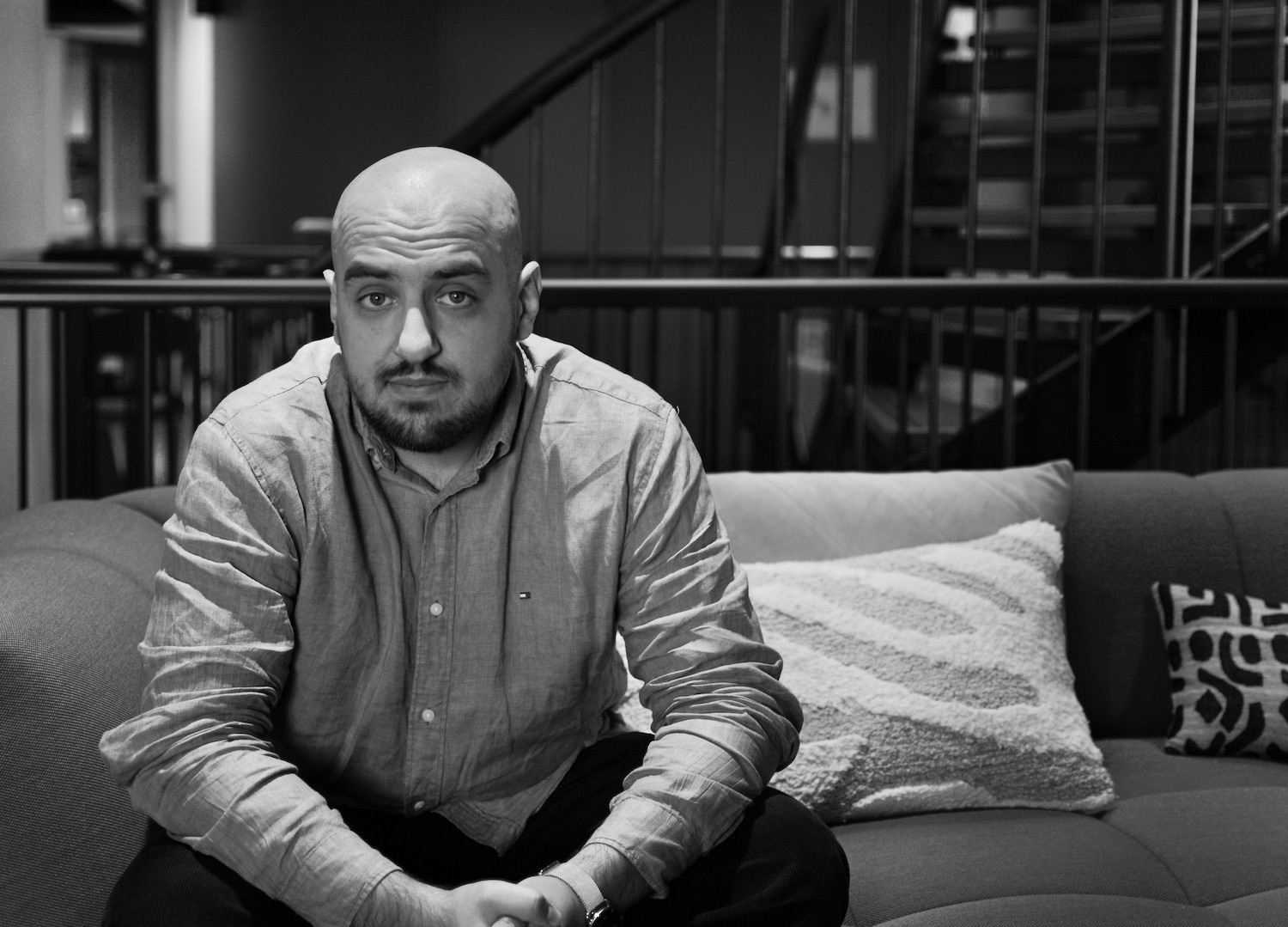
We spoke with Maxim Akhmedov, who leads engineering for Nebius Agentic Search (Tavily), about the team’s vision, the advantages of building within Nebius and what he is looking for in engineers.
Could you start by telling us about your career path?
My professional career began in 2015, and it has always revolved around data and big data in one form or another. I worked on infrastructure that stored exabytes of data. There weren’t many companies in the world operating at that scale at the time. We developed the infrastructure needed to store, process, and analyze data across tens of thousands of servers and several data centers.
My core expertise is data infrastructure, particularly high-load, high-throughput, high-performance systems operating at a very large scale. That experience is highly relevant to my current role.
When I joined, my first focus was deploying similar infrastructure here. I then led a team building data products. Earlier this year, part of that team, including me, launched our Agentic Search initiative. We began building a new pillar within Nebius, alongside the cloud business and Nebius Token Factory: a business centered on data for agents. Nebius also acquired Tavily earlier this year, a startup whose technology became the foundation of our Agentic Search offering, while Tavily itself remains our flagship search product. I lead engineering for it.
Until recently, I was deeply involved in the academic and Olympiad communities, both as a participant and as an educator. I competed in the ICPC World Finals and the International Olympiad in Informatics, and spent many years teaching Mathematics and Computer Science to high school and university students, covering both traditional academic subjects and competitive programming and Olympiad preparation. These communities have been an important part of my life for many years.
What drew you to agentic search and what are you building now?
Today, as we build agentic search, the scale is becoming even more important. An active internet user might make around 20 searches on Google during a day. An agent could make thousands of queries while conducting research or completing coding tasks. The volume of information retrieved by agents could therefore become orders of magnitude larger.
We believe agentic search will eventually surpass traditional human search, potentially as soon as early next year. AI is accelerating everything, and search is no exception. More broadly, we’re building a business that revolves around data for agents.

What are some of the interesting challenges you’re facing as you build the product?
In the AI era, we are constantly breaking assumptions that worked for 20 years. We all understand what web search looks like. We’re used to searching on Google, and we have an intuition for the kinds of queries it handles well and the ones it does not.
Those assumptions are now changing. Much of the intuition inherited from the previous 25 years of the search industry no longer works. We have to adapt and make the right decisions very quickly. That ability to adapt is one of the things that will define success in the AI era, distinguishing companies like Nebius from traditional hyperscalers, and agentic search products from traditional search engines.
At the same time, it’s now possible to build a search engine much faster than it was in the past, perhaps ten times faster. We don’t have 25 years to build another big search company. We have to move on a much shorter timeline. At the same time, the pace of building technology has changed dramatically. What we’ve built in 2026 would have been almost unimaginable just a few years earlier. Things that once took decades can now be accomplished in a fraction of that time. We don’t have 25 years to build another major search company, and we don’t need them.
Unlike traditional search engines, our product is primarily consumed by AI agents rather than directly by humans. We need to understand how agents operate, the problems they solve, and their typical working patterns. We need that understanding across the entire stack so that we can build a system that complements agents as effectively as possible.
How are you approaching the challenge of building a strong team?
We are hiring the best people we can find. We are very ambitious and Nebius’s strong position and resources give us the freedom to pursue ambitious technology without being heavily constrained by the availability of infrastructure.
We have a high degree of autonomy, which allows us to move quickly and maintain momentum. When we need support from the wider Nebius organization, it’s there. It’s a great environment for building in this way. Search is also part of our DNA. We have people who know how to build these systems at scale and how to build them well.
You also mentioned the importance of speed. How do you maintain it?
This may not sound very different from what other startups say, but we rely heavily on agentic coding, automated research, and the automation of tasks that would have been on the critical path three years ago.
The tools have changed how quickly we can do the work. We try to use them throughout the way we operate, not only in the products we build.
If you had to describe what you’re building in one sentence, what would it be?
We are shaping how AI consumes information from the internet in the fastest, most token-efficient and highest-quality way possible.
You’re building a system for agents. Are you also building agents that search?
That’s a great question. We are not only building search for agents. We are also building agentic products that solve data-intensive problems.
These range from general solutions, such as deep research, to targeted, industry-specific products. Our ambition is to provide a vertically integrated solution. Nebius operates across multiple layers of the AI infrastructure stack, from power and data centers to inference engines. We are applying a similar approach to data: working across the entire stack, from the large amounts of data we hold to specific, domain-focused solutions that use that data. Because we work across the whole stack, we can make those solutions as efficient and high-quality as possible.
What is Nebius like from the inside? Is there a moment that made you think, “This could only happen at Nebius”?
There is a sentimental aspect for me because I have been with Nebius since day zero.
I remember when everybody in the Amsterdam office could fit into a small coffee point and ask questions directly of someone from the board or the leadership team. It was simply a small room of people sitting together. Since then, Nebius has grown into an international company with people across Europe, the US, the Middle East and Asia.
It is a very fast-moving company, and the work sits right at the front of the industry. Nebius speaks with frontier labs, big technology companies, and many other organizations adopting AI because we provide the computing infrastructure they need. We learn a great deal from those conversations and they shape how we develop our software and help us adopt emerging practices quickly.
The people here are also a major competitive advantage. The standards we maintain are very high, and we see hiring great people as an important investment.
When I participated in programming competitions, we would have five hours to solve a set of problems. You were constantly sprinting and watching the time run down: four hours left, then three. Working in AI now feels like an unending version of that competition, with the whole world participating. I would say we’re doing well in this competition.
What are the key characteristics you look for in candidates?
The first is curiosity and the urge to keep learning. People need to adapt continuously as new AI approaches emerge. This applies to managers too. I don’t spend all my time coding. I also do things such as scheduling meetings, speaking with people, and creating spreadsheets or business models. Today, AI can help with many of those tasks. You need to keep asking yourself which activities take up your time and which ones you’re doing inefficiently. Without that habit, you can lose momentum while everybody else is speeding up.
The second characteristic is technical expertise. We are building a complicated software product, a new generation of software created after the AI revolution. It cannot be built with a single prompt to an agent. The product must operate at a very large scale and requires substantial infrastructure. We need specialists with deep expertise, but we also value people with broad architectural knowledge who can understand how their work fits into the larger system.
We’re looking for a combination of deep specialist knowledge, broad technical understanding, genuine interest in AI and the drive to build ambitious products.
Do you have any advice for people who want to join the team?
Go ahead and apply. We are a company for builders, and the best way to understand our product is to try it and build something with it.
You can get started with Tavily with almost no manual setup. Simply ask your coding agent to set up Tavily, and it can install the necessary tools and start using search on its own. The product is genuinely agentic: it’s designed not only for people, but also for agents.
Our team is also one of the most diverse and geographically distributed teams within Nebius. We work across London, Amsterdam, Tel Aviv, New York and most recently, Zurich. We benefit from this blend of cultures and backgrounds. That diversity is especially valuable because we are trying to build something new: the infrastructure and products that will determine how agents find and consume information from the internet.

What is Nebius like from the inside?
The team is strong. Seriously strong; the level is comparable to big tech in its best years. People work efficiently, and everyone is focused on what actually needs to get done.
On product vision, I’d describe it as deliberately absent, and I mean that in a good way. The strategy is: AI is coming, we know hardware capacity will be needed, but we don’t know exactly how the market will evolve, which services will dominate, or what the ratio of inference to training will look like in three years. We will do what’s needed. We are capable and efficient, and we move fast when the market shows us where it’s going.
Where we are now is above all possible expectations we had two years ago. The targets that seemed unreasonably ambitious back then, we are now well past them. That’s actually mind-boggling. That wouldn’t have been possible without the AI wave, but you still have to be built well enough to catch it.
How would you describe your work personality?
Results-oriented, delegating, and I’ll be honest, productively lazy. Being lazy in the right way means I try to be intentional about where I invest my time, while creating opportunities for others to take ownership, develop their skills and contribute meaningfully.
Any reflections on where the industry is heading?
I don’t think this is a bubble. If you’ve actually used these tools, asked ChatGPT about something you genuinely care about, used it as an advisor in an area where you’re not an expert, the value is real. I use it for medical questions. I recently used it to troubleshoot a plumbing problem, taking pictures of the pipes. It already works.
My bigger conviction is that the truly transformational moment will be physical AI, when models can act in the physical world. Humans, at the end of the day, want a fairly short list of things: enough food, entertainment, health, and to not spend their lives doing physical labor. Physical AI can address that last one. I believe physical AI will be a norm. If you take all cars, all home appliances, all smartphones and electronic devices combined, I think the physical AI market will eventually be larger than all of that. It won’t happen tomorrow, but I believe it’s coming. And we will have way more time to be humans, do human things: take care of our health, play sport, sing songs.